I wrote this question because tiredness felt too easy to explain with one story. A map of possibilities popup: glutamate buildup, a mismatch between our bodies and modern routines, caffeine, adenosine, chronotypes, and poor sleep quality. It was a list of things I could notice and test
The key question underneath: does sustained mental effort change how tired I feel? I can keep that question without pretending one chemical explains brain fatigue.
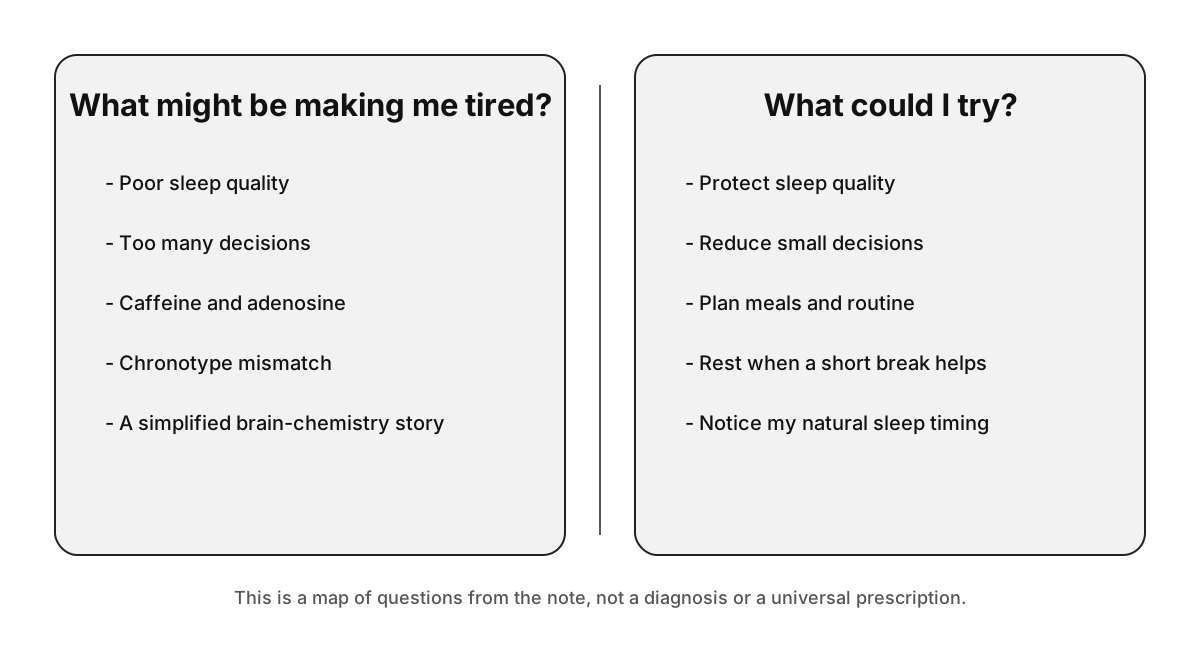 The note is a map of questions and experiments
Adenosine gives me another simple clue. It is involved in sleep pressure, while caffeine can mask some of that pressure for a while. That makes coffee useful, but also easy for me to misread. Feeling more alert after coffee does not prove I was rested. It may only mean the signal got quieter.
The "evolutionary mismatch" idea is similarly a prompt, not a diagnosis. Artificial light, fixed schedules, caffeine, and long runs of decisions may pull me away from what feels natural. I have called my chronotype "Bear." I treat that as a useful label for my observed pattern, not a scientific diagnosis or a fixed identity. If the label helps me schedule demanding work when I am usually more alert, it has done enough.
The actions in the note are intentionally small. I can try a siesta when my day allows it. I can limit unnecessary decisions, with meal planning as the obvious example. I can test an occasional coffee nap instead of adding another coffee and pushing through. I can place harder work closer to my observed rhythm. None of these is a universal prescription, and none replaces sleep.
I finally end with "get enough quality sleep". The CDC says adults ages 18 to 60 generally need seven or more hours, and defines quality sleep as uninterrupted and refreshing. I would end there before blaming a neurotransmitter or trying to optimize every afternoon dip.