When people say a central bank "prints money," it sounds as if the bank sends fresh cash straight to the government or tells commercial banks to make loans. Quantitative easing (QE) is less direct. Most of the money is digital, and the policy works through bond markets and financial conditions.
Here is the 6-step model they usually use.
- The government issues bonds when it needs to borrow.
- Investors buy those bonds. Commercial banks may buy them, but so can pension funds, insurers, asset managers, households, and overseas investors.
- The central bank buys eligible bonds in the secondary market. It pays by creating central bank reserves. If the seller is not a bank, the seller usually receives a new bank deposit while its bank receives the reserves.
- Those purchases tend to raise bond prices and lower their yields. Lower yields can pull down other interest rates and make financing easier for businesses and people.
- Easier financial conditions are intended to support spending and investment, helping the economy move back toward stable inflation and normal activity.
- When that support is no longer needed, the central bank can reduce the position. It may let bonds mature without replacing them, sell some bonds, or use both methods. The holdings then fall. All else equal, runoff or sales drain reserves, although other central-bank operations can offset that effect.
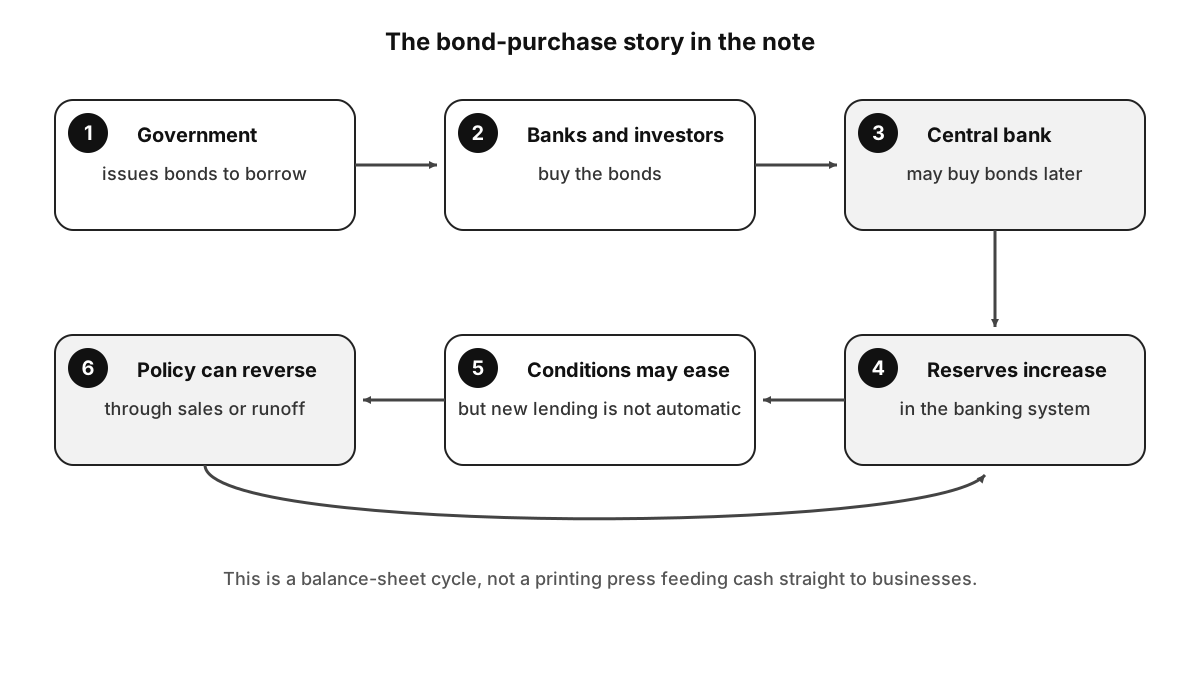 A central bank can create reserves to buy bonds, ease financial conditions, and later reverse or let the position run off.
3 important details
First, not every government bond passes from the government to a commercial bank and then to the central bank. QE normally happens in secondary markets, after issuance. The central bank can buy from a range of private investors, often with banks or dealers handling settlement.
Second, reserves do not automatically turn into loans. Only eligible central-bank account holders hold reserves, usually banks and, in some systems, other financial institutions. They cannot transfer reserve balances directly to a household or ordinary business. A bank makes a loan when it finds a willing, creditworthy borrower and the loan fits its pricing, capital, liquidity, and risk constraints. More reserves can make financial conditions easier, but they do not force that decision.
Third, normalization does not always require active bond sales. A central bank can stop reinvesting proceeds as bonds mature, so its holdings and reserves shrink gradually. It can also sell assets. The Bank of England describes both routes, and says QE purchases are funded by digitally created central bank reserves.
So "printing money" is acceptable shorthand only if we remember what actually happens: the central bank swaps newly created reserves for bonds, trying to ease financial conditions. It is not a guarantees new loans or a return to normal.